After More Than Three Centuries, a Geometry Problem That Originated with a Royal Bet Is Solved
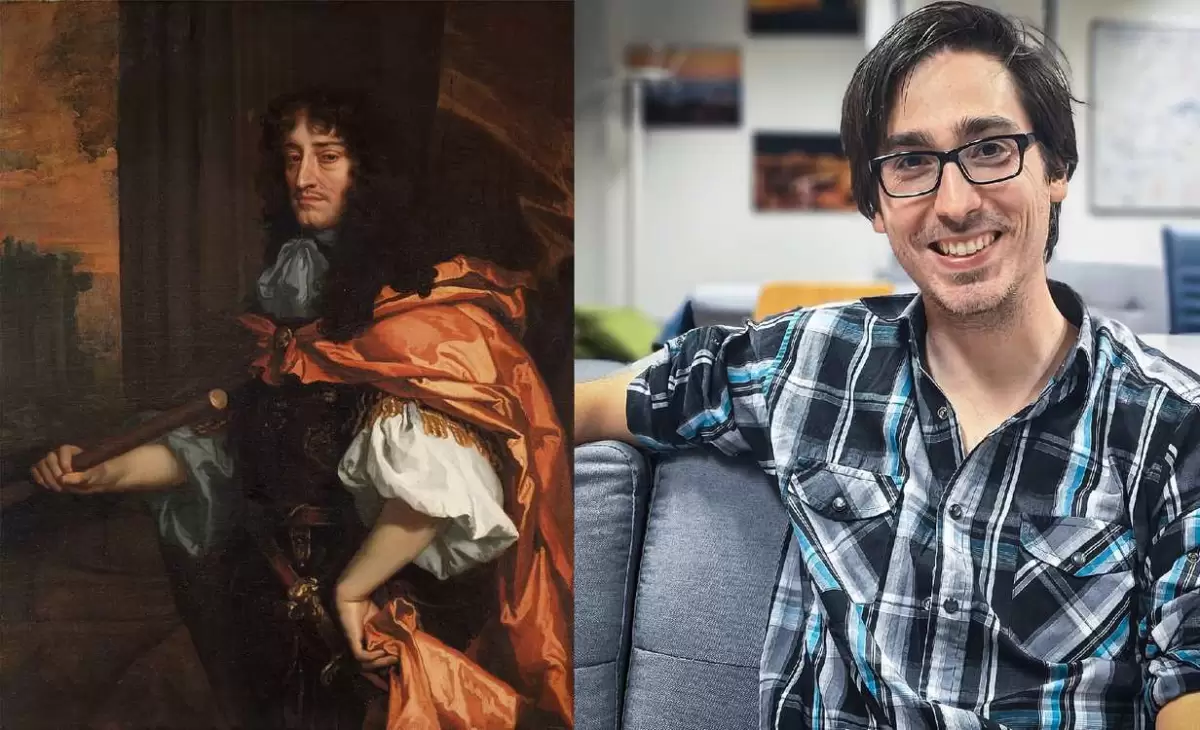
A geometry puzzle originating more than three centuries ago has finally been resolved. In the 17th century, Prince Rupert of the Rhine (a nephew of King Charles I) made a bet with mathematician John Wallis: a cube could have a hole bored through its interior, along a diagonal from one face to the opposite corner, allowing a second cube of the same size to pass through. Wallis formalised this as the “Rupert property.”
Good News Network
Over the years mathematicians discovered that many other polyhedra also enjoy the Rupert property: for example, a tetrahedron, an octahedron, a dodecahedron and icosahedron all allow an identical copy of themselves to pass through a suitably bored tunnel.
Good News Network
Now, researchers Jakob Steininger and Sergey Yurkevich have constructed a novel shape—a so-called “Noperthedron”—that breaks this pattern. Using detailed theorems and computational search (on the order of tens of millions of checks), they proved that this 180-sided object cannot admit a tunnel through which a congruent copy could pass, regardless of orientation or placement.
Good News Network
Their achievement renders the longstanding assumption—that every convex polyhedron might exhibit the Rupert property—incorrect. Instead, it shows that the property is not universal. Steininger and Yurkevich, doing this largely in their spare time, say they’ll continue investigating other such curious geometric questions.
Comments